Introduction
Pasta is one of the most popular and delicious foods enjoyed by people around the world. It is famous for its different shapes, rich sauces, creamy flavors, and delicious combinations of ingredients. Pasta originally became an important part of Italian food culture, but today it is served in restaurants, cafes, hotels, and homes in many countries.
One of the best things about pasta is its versatility. It can be prepared with tomato sauce, white sauce, cheese, vegetables, chicken, beef, and seafood. Some people enjoy spicy pasta, while others prefer creamy and cheesy recipes.
Pasta is suitable for lunch, dinner, family gatherings, and casual meals. Its easy preparation and variety of flavors make it a favorite choice for food lovers. In this article, we will explore different pasta varieties, popular sauces, ingredients, nutritional benefits, and tips for enjoying pasta.
What Is Pasta?
Pasta is a traditional food generally made from wheat flour and water, although eggs and other ingredients may also be used. The dough is shaped into different forms, dried or cooked fresh, and then boiled before serving.
Pasta comes in many shapes and sizes, including long strands, short tubes, spirals, and small shells. Each shape works well with different sauces and recipes.
It is commonly served with tomato sauce, cream-based sauces, cheese, herbs, and vegetables. Chicken, beef, mushrooms, and seafood are also popular additions.
History of Pasta
Pasta has a long history connected with Mediterranean food traditions. Although its exact origins are debated, pasta became especially important in Italy, where different regions developed their own recipes and preparation methods.
Over time, pasta production expanded, and it became easier to transport and store dried pasta. This helped introduce Italian pasta dishes to other parts of Europe and eventually the rest of the world.
During the twentieth century, Italian restaurants helped make pasta internationally famous. Today, it is one of the most recognizable foods in global cuisine.
Popular Types of Pasta
There are many pasta varieties, each offering a different shape and eating experience.
- Spaghetti
Spaghetti is one of the most recognizable pasta types. It consists of long, thin strands and is commonly served with tomato sauce, meatballs, garlic, and cheese.
- Penne Pasta
Penne is a short, tube-shaped pasta with diagonal ends. Its shape makes it suitable for thick sauces, creamy recipes, and baked pasta dishes.
- Macaroni
Macaroni is a small curved pasta that is widely used in cheese-based recipes. Macaroni and cheese is one of its most popular dishes.
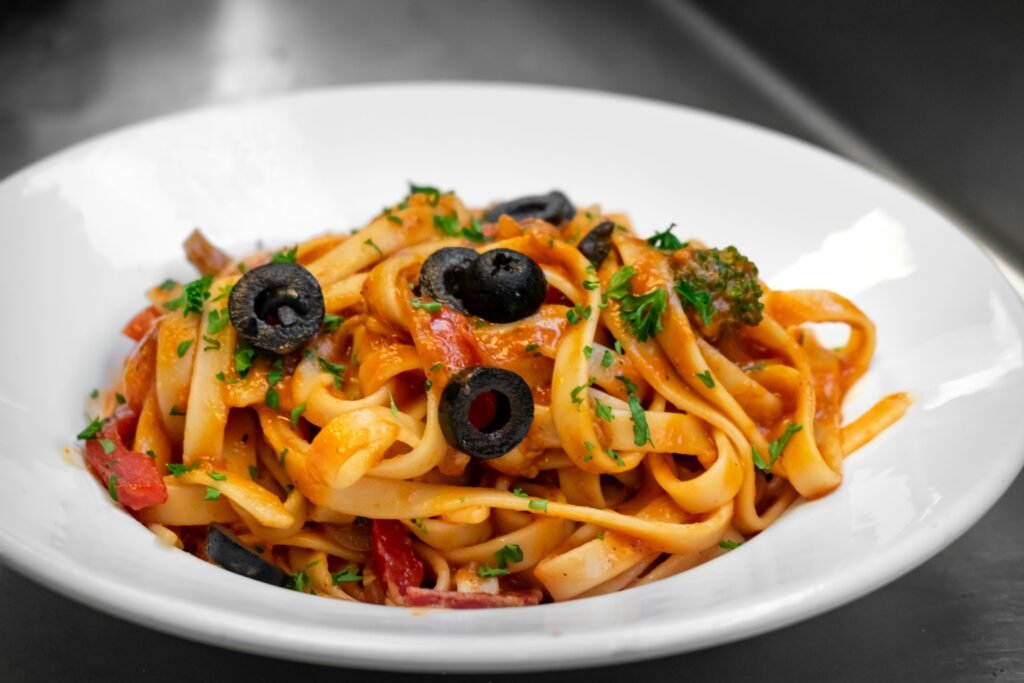
- Fettuccine
Fettuccine consists of long, flat ribbons. It is often served with creamy Alfredo sauce, chicken, mushrooms, and Parmesan cheese.
- Fusilli
Fusilli has a spiral shape that helps hold sauces and seasonings. It is commonly used in pasta salads and vegetable-based recipes.
- Lasagna
Lasagna is made using wide, flat pasta sheets arranged in layers with sauce, cheese, and meat or vegetables. It is baked until the ingredients become hot and flavorful.
Popular Pasta Sauces
Sauces play an important role in creating delicious pasta dishes. Different sauces provide different flavors and textures.
- Tomato Sauce: A classic sauce made with tomatoes, garlic, onions, and herbs.
- Alfredo Sauce: A creamy sauce commonly prepared with butter, cream, and Parmesan cheese.
- Pesto Sauce: A flavorful green sauce traditionally made with basil, garlic, olive oil, nuts, and cheese.
- Arrabbiata Sauce: A spicy tomato-based sauce made with chili and garlic.
- Carbonara Sauce: A traditional Italian-style sauce commonly prepared with eggs, cheese, and cured pork.
- Cheese Sauce: A rich and creamy option popular in macaroni and other pasta recipes.
Main Ingredients Used in Pasta
Pasta recipes can include many ingredients depending on personal taste.
- Pasta: The main ingredient that provides the base of the dish.
- Tomatoes: Add natural sweetness and acidity.
- Cheese: Provides a creamy and rich flavor.
- Chicken: Adds protein and savory taste.
- Garlic: Improves aroma and flavor.
- Onions: Add sweetness and depth.
- Mushrooms: Provide an earthy flavor.
- Olive Oil: Commonly used in Italian-style cooking.
- Herbs: Basil, oregano, and parsley improve the aroma.
- Vegetables: Capsicum, spinach, and broccoli add color and nutrients.
Nutritional Benefits of Pasta
Pasta can provide several nutrients depending on its ingredients and portion size.
- Source of Energy: Pasta contains carbohydrates that provide energy for daily activities.
- Protein: Some pasta varieties contain protein, while chicken, cheese, and beans can increase the protein content of a meal.
- B Vitamins: Enriched pasta may provide important B vitamins that help the body use energy from food.
- Dietary Fiber: Whole-wheat pasta contains more fiber than many refined pasta varieties. Fiber supports healthy digestion.
- Versatile Ingredients: Adding vegetables and lean protein can improve the nutritional balance of pasta dishes.
Disadvantages of Eating Too Much Pasta
Although pasta can be part of a balanced diet, some preparations may contain excessive calories, fat, and sodium.
- High Calories
Large portions of pasta with creamy sauces and extra cheese can contain many calories.
- Excessive Carbohydrates
Eating very large portions may make it difficult to balance carbohydrate intake with other nutrients.
- High Fat Content
Some creamy pasta recipes contain considerable amounts of butter, cream, and cheese.
- High Sodium
Restaurant sauces, processed meats, and added seasonings may contain significant amounts of sodium.
Tips for Making Healthier Pasta
You can enjoy delicious pasta while making smarter food choices.
- Choose whole-wheat pasta when available.
- Add fresh vegetables such as spinach and broccoli.
- Use grilled chicken or beans for protein.
- Avoid excessive cream and butter.
- Choose tomato-based sauces more often.
- Control your serving size.
- Use moderate amounts of cheese.
- Prepare homemade sauces with fresh ingredients.
These simple changes can help make pasta a more balanced meal.
Why Is Pasta So Popular?
Pasta is popular because it is affordable, versatile, and easy to prepare. It can be cooked in many different ways, allowing restaurants and home cooks to create countless recipes.
Another reason for its popularity is its compatibility with different ingredients. People can enjoy vegetarian pasta, chicken pasta, seafood pasta, or traditional Italian recipes.
Restaurants also introduce new pasta combinations to attract customers. Food bloggers and cooking channels regularly share pasta recipes, making it even more popular among people who enjoy preparing meals at home.
Conclusion
Pasta is a delicious and versatile food that has become popular across the world. Its different shapes, flavorful sauces, and variety of ingredients make it suitable for many tastes and occasions.
From spaghetti and penne to macaroni and lasagna, there are many pasta varieties to explore. Pasta can provide energy, carbohydrates, and other nutrients, especially when prepared with whole grains, vegetables, and lean protein.
However, eating very large portions with rich sauces may increase calorie, fat, and sodium intake. Choosing fresh ingredients and balanced portions can help you enjoy pasta as part of a healthy lifestyle.
Whether served in an Italian restaurant or prepared in your own kitchen, pasta remains a wonderful meal for food lovers everywhere.